
During a September 19, 2002 Major League Baseball game between the Kansas City Royals and Chicago White Sox at Chicago's Comiskey Park, a shocking on-field assault occurred.
The Attack Incident
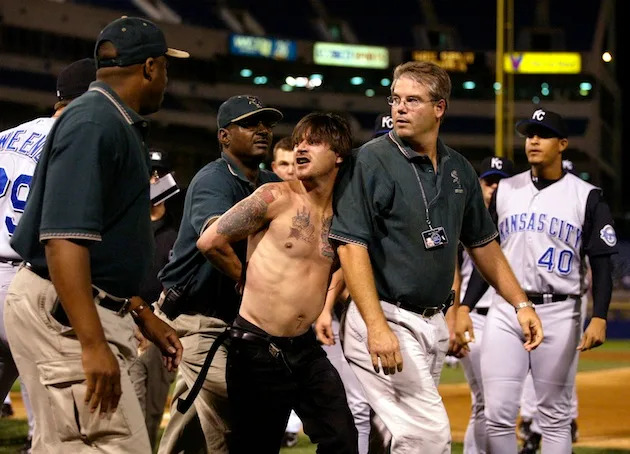
Kansas City Royals first base coach, Tom Gamboa, aged 54, was violently attacked while performing his duties in the first-base coach's box during the game. Two spectators, William Ligue Jr. (34) and his 15-year-old son, William Ligue III, leaped onto the field from the stands without warning.
They tackled Gamboa from behind, punching him repeatedly as he fell to the ground. Royals players, led by pitcher Runelvys Hernández, and security personnel rushed to intervene and subdue the attackers.
The Attackers and Aftermath
- Identity and Motive: William Ligue Jr. and William Ligue III. Investigators cited alcohol intoxication as a key factor, with Ligue Jr. claiming dissatisfaction with the team as a secondary motive.
- Injuries: Gamboa suffered permanent, partial hearing loss in one ear due to the blows, along with cuts and bruises. He required hospital treatment.
- Legal Consequences: The attackers were charged with felony aggravated battery. Ligue Jr. ultimately received 30 months' probation after pleading guilty; the juvenile son received 5 years' probation and 30 hours of community service. Both were permanently banned from all MLB stadiums.
Immediate and Long-Term Impact
- League-Wide Security Overhaul: The incident forced Major League Baseball and individual teams to significantly reassess and increase stadium security presence. Measures included heightened vigilance by field personnel, more uniformed officers near dugouts and along baselines, enhanced crowd monitoring, and improvements to field barrier designs.
- Player and Personnel Safety Focus: Protecting non-playing personnel (coaches, umpires, broadcasters) became a paramount security concern alongside player safety. Teams implemented or reviewed specific protocols for rapid response to field intrusions.
- Heightened Awareness: The event remains a stark reminder of vulnerability within sports venues, emphasizing the critical need for robust security to protect staff from unpredictable spectator actions.