
Omar Khan's plan for the Pittsburgh Steelers hinges on strategic, adaptable roster building focusing on value, foundational development, and disciplined decision-making. Here's why it's yielding results:
Roster Construction & Salary Cap Mastery
- Veteran Retention & Restructuring: Khan expertly manages the salary cap by restructuring key veterans like Cam Heyward and TJ Watt, ensuring core talent remains in Pittsburgh while freeing up immediate capital.
- Calculated Free Agency: He avoids massive, risky free-agent splashes. Instead, he targets affordable, high-character veterans with specific roles (e.g., Patrick Peterson, Cole Holcomb, Elandon Roberts) who complement the team identity and draft picks.
- Prioritizing Homegrown Talent: Significant investments are made in retaining cornerstone players developed within the system (e.g., Watt, Minkah Fitzpatrick, Diontae Johnson extensions pre-trade), fostering stability and rewarding performance.
Draft Prowess & Development Focus
- Volume & Value: Khan consistently maneuvers in the draft to acquire premium picks without sacrificing major capital (e.g., trading down, targeting compensatory picks). The 2023 draft netted key starters like Broderick Jones and Joey Porter Jr. alongside significant future assets.
- Positional Value Alignment: High draft capital is focused on premium positions: offensive tackle, cornerback, pass rusher, and quarterback. This strategy maximizes the impact of top picks.
- Emphasis on Development: The plan leans heavily on Mike Tomlin's coaching staff to develop mid-to-late round picks and younger players into contributors (e.g., Jaylen Warren, Keeanu Benton), creating depth and cost-controlled talent.
Addressing Core Needs with Conviction
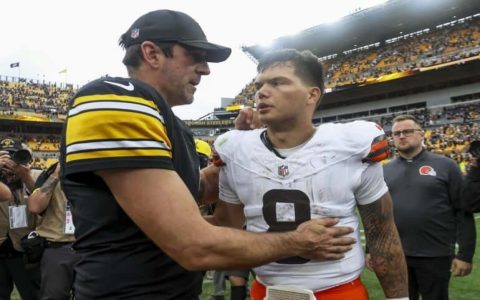
- Aggressive QB Reshuffle: Recognizing the need for competition and a potential future starter, Khan decisively moved on from Kenny Pickett, acquiring Russell Wilson for cost certainty and Justin Fields for upside development – significantly upgrading QB room talent and outlook with minimal financial risk.
- Trade Acumen: The landmark trade for S Minkah Fitzpatrick exemplifies Khan's (then Assistant GM) ability to identify elite talent available via trade and secure it using future draft capital wisely – a move foundational to the current defense.
Establishing a Cohesive Football Structure
- Strong Collaboration: Khan fosters a unified front office, working closely with Assistant GM Andy Weidl and Coach Mike Tomlin, ensuring alignment in scouting, drafting, and roster philosophy.
- Clear Vision & Patience: The plan isn't a quick fix. It emphasizes sustainable success through draft-and-develop principles, disciplined cap management, and targeted veteran acquisitions, building a consistently competitive roster year-over-year.
- Cultural Continuity: Khan's moves prioritize players who fit the "Steelers Way" – toughness, discipline, and professionalism – maintaining the strong organizational culture established over decades.
Top Results Demonstrating the Plan's Efficacy
- Improved Roster Depth & Quality: The overall talent level across the roster, particularly on both lines and in the secondary, has noticeably increased, creating genuine competition.
- Salary Cap Health: Despite big contracts, Khan consistently positions the team with sufficient flexibility under the cap for future moves and extensions.
- Competitive Performance: The team has consistently remained competitive, exceeding expectations in 2023 despite offensive struggles, demonstrating a resilient roster.
- Resolved Quarterback Uncertainty: The cost-effective, high-upside acquisitions of Wilson and Fields transformed the QB position from a significant weakness into a potential strength.
- Asset Accumulation: Strategic trading has resulted in accumulating valuable future draft capital while still addressing immediate needs.
Omar Khan's plan works because it's a holistic approach: disciplined financial management married to aggressive talent acquisition when value is identified (trades, QB moves), underpinned by a relentless focus on the draft and player development. This creates a sustainable model for competitiveness.